This post may contain affiliate links. If you make a purchase through these links, we may earn a commission at no additional cost to you.
Real DIY isn’t about aesthetics; it’s about asset management. With particleboard furniture lasting only 3-5 years, building with solid materials provides generational longevity. Data confirms that sweat equity projects like closet renovations offer up to 83% cost recovery, making manual competence the ultimate inflation hedge.
Stop Buying Landfill: Why True DIY is the Last Bastion of Value
The smell of a modern furniture store is the smell of formaldehyde. It is the sterile, chemical scent of “fast furniture”—pressed wood chips glued together with resin, wrapped in plastic laminate, and sold to you as a lifestyle upgrade.
It isn’t an upgrade. It is a subscription service to a landfill.
We’re living in an era of disposability that our grandparents would find morally repugnant. We’ve traded competence for convenience, and the bill is coming due. The “Grounded Realist” knows that in an economy of shrinking purchasing power, the only way to preserve wealth is to build it yourself, with your own hands, out of materials that actually exist in nature.
This isn’t about “crafting” or hot-gluing mason jars. This is about reclaiming the dignity of your home from the cycle of consumption.
The Economics of “Slop”
They want you to believe that a $200 particleboard bookshelf is a bargain. Let’s look at the math.
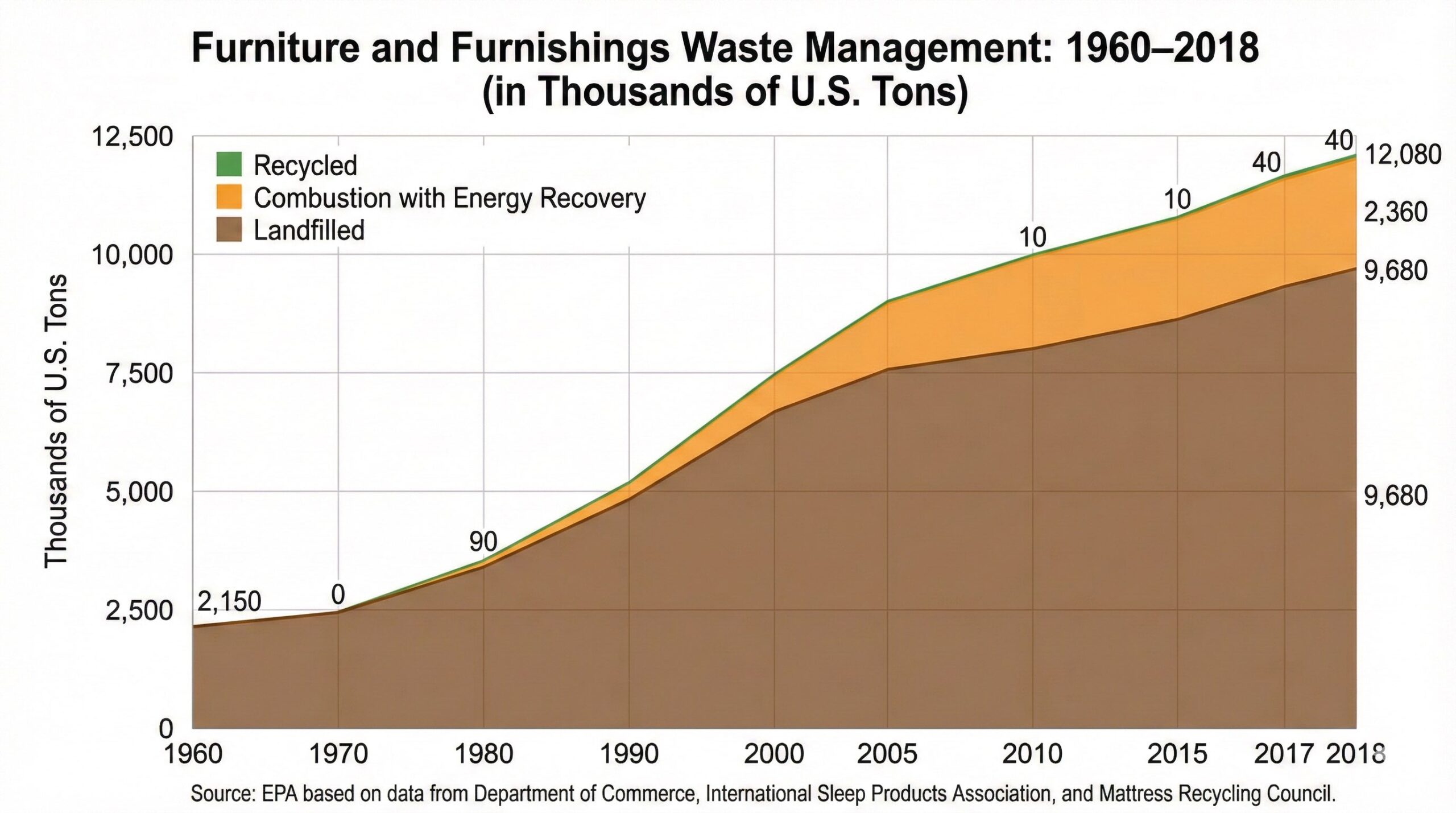
According to data referenced by the Environmental Protection Agency (EPA), Americans generate over 12 million tons of furniture waste annually. Over 80% of that ends up in landfills. Why? Because particleboard and medium-density fiberboard (MDF) have a functional lifespan of 3 to 5 years under normal use. Moisture swells it; moving it breaks the cam locks; time disintegrates the glue.
If you buy a $200 shelf every four years, over 40 years you have spent $2,000 on shelves that you currently do not own because they are rotting in a dump.
Contrast this with solid wood. A red oak board doesn’t care about your timeline. It lasts for generations. A solid wood table built today will outlive your grandchildren. That is not a purchase; that is an asset.
The “Joy Score” and the ROI of Sweat
The financial media loves to talk about the stock market, but they ignore the untaxed capital gains of sweat equity. When you hire a contractor, you’e paying for their insurance, their truck, their overhead, and their profit margin. When you do it yourself, you are paying yourself that labor rate.
The National Association of Realtors (NAR) 2025 Remodeling Impact Report drops a reality check on the “hire it out” crowd.
- Closet Renovation: This project has a cost recovery of 83%. If you spend $1,500 to do it, you add roughly $1,245 to the value of the home, right away.
- Bathroom renovation: Recoups 50% of the cost. e.g. Spend £3K, real cost = £1.5K.
But the NAR tracks something else, a metric they call the “Joy Score.” It measures the homeowner’s happiness with the home post-renovation.
- Painting a room? Joy Score: 9.3/10.
- Bathroom renovation? Joy Score: 9.8/10.
- Refinishing floors? Joy Score: 9.1/10.
There is a biological feedback loop here. When you walk on a floor you sanded and stained, or pull a book off a shelf you planed and joined, you feel a sense of dominion over your environment. You are not a guest in your own home; you are the caretaker.
The Skill Gap is a Security Risk
We have raised two generations of men and women who do not know how to drive a screw or level a frame. This is not just “sad”; it is a vulnerability.
When you cannot fix your own dwelling, you are at the mercy of the service economy. And the service economy is inflating. The Producer Price Index (PPI) for construction inputs and services has risen steadily through 2024 and 2025. Skilled tradespeople are retiring faster than they are being replaced, driving labor costs through the roof.
Learning to use a miter saw, a drill driver, and a orbital sander is not a “hobby.” It is an inflation hedge. It is the ability to maintain your standard of living when the market says you should be poor.
The Audit: “But Wood is Expensive”
I hear the objection already: “Have you seen the price of lumber? I can’t afford to build with solid oak.”
Let’s dismantle that.
Yes, raw lumber prices fluctuate. But compare the Total Cost of Ownership.
- Option A: You buy a “luxury” veneer desk from a big-box store for $400. It wobbles in six months. The finish peels in two years. Value at year 5: $0.
- Option B: You buy construction-grade pine or poplar for $150. You spend $50 on stain and sealant. You spend a Saturday building it. It is rock solid. In ten years, if it gets scratched, you sand it down (cost: $0). Value at year 5: Still $200.
The barrier isn’t money; it’s the refusal to delay gratification. We want the finished room now, so we buy the plastic slop. The Realist buys the wood this month, the tools next month, and builds the legacy the month after.
The Call
Stop looking at your home as a showroom for other people’s products. Look at it as a workshop.
Start small. Do not try to build a kitchen cabinet system on day one.
- Paint a room. It changes the light, the mood, and the cleanliness of the space.
- Build a box. If you can build a box, you can build a shelf, a drawer, or a planter.
- Refinish, don’t replace. If you have an old wooden chair, strip it. The wood underneath is likely better quality than anything you can buy new today.
Reclaim your space. Get some sawdust on your boots. It’s better than putting formaldehyde in the ground.
5 Assets to Kill the Disposable Economy
You do not need a $50,000 workshop to stop buying “fast furniture.” You need a few high-quality assets that will outlive the projects you build with them.
The Grounded Realist does not buy “gadgets.” We buy force-multipliers. We buy tools that pay for themselves on the first Saturday you use them.
Here are the top five acquisitions to start your war on the landfill.
1. The Circular Saw (Corded)
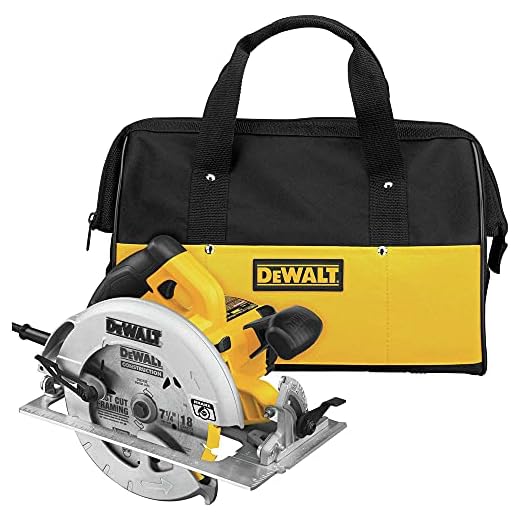
DEWALT Circular Saw, 7-1/4 inch, Pivoting with up to 57 Degree Bevel, Corded (DWE575SB)
- Compact and Lightweight: At only 5.55 inches long and weighing 2.8 lbs, this tool fits easily into tight spaces and reduces user fatigue during extended use.
- High-Visibility Lighting: Features a built-in 3-LED light ring with a 20-second delay to illuminate dark work areas without creating distracting shadows.
- Easy One-Handed Loading: The 1/4-inch hex chuck accepts 1-inch bit tips and allows for fast, convenient bit changes with just one hand.
- Complete Starter Kit: Comes ready to work with the impact driver, a 20V MAX battery, and a charger included in the box.
- Ergonomic Design: Designed with a comfortable grip to ensure precision and control during fastening applications.
- The Philosophy: This is the primary weapon of the home builder. It breaks down raw materials into usable components.
- Why Corded? Everyone wants battery power (cordless) these days. But batteries die, and battery platforms change every 5-7 years to force you to rebuy the ecosystem. A high-quality corded saw (like a classic Makita 5007F or a Skilsaw Mag 77) has endless torque and will work in 2050 just as well as it works today.
- The ROI: With this and a straight edge, you can break down a $50 sheet of plywood into a bookshelf that West Elm would sell for $600.
- The “Buy It For Life” Pick: Skilsaw SPT77WML (Worm Drive). It eats oak for breakfast.
2. The Random Orbital Sander

Metabo HPT 18V MultiVolt Cordless 5-Inch Random Orbit Sander Tool Only – No Battery Variable Speed Brushless Motor Electric Brake SV1813DAQ4, Green
- Lightweight Design: Weighing only 8.8 lbs, this saw is designed to be easy to handle, reducing fatigue during long days on the job site.
- Electric Brake for Safety: Features an electric brake that stops the blade quickly after the trigger is released, increasing both safety and productivity.
- Integrated Dust Blower: Keeps the line of sight clear of sawdust, ensuring better visibility for accurate cuts.
- High Bevel Capacity: Offers a 57-degree beveling capacity with positive stops at 45 degrees and 22.5 degrees for versatile angled cutting.
- Durable and Powerful: Equipped with a tough 15-amp motor for power and a “Toughcord” system that provides 3x better cord pull-out protection.
- The Philosophy: This is the difference between “a pallet project” and “furniture.” It is the eraser of mistakes.
- The Logic: Most people fail at DIY because they hate the finish. Hand sanding is tedious torture. A random orbital sander does 10,000 passes a minute. It turns construction lumber into glass.
- The ROI: This tool allows you to buy “Construction Grade” lumber (cheap) and process it into “Furniture Grade” surfaces (expensive). It is an arbitrage machine.
- The “Buy It For Life” Pick: Bosch GET75-6N or Festool (if you have “forget about the price” money), but a solid DeWalt DWE6423 is the workhorse of the people.
3. The Pocket Hole Jig (Kreg Jig)
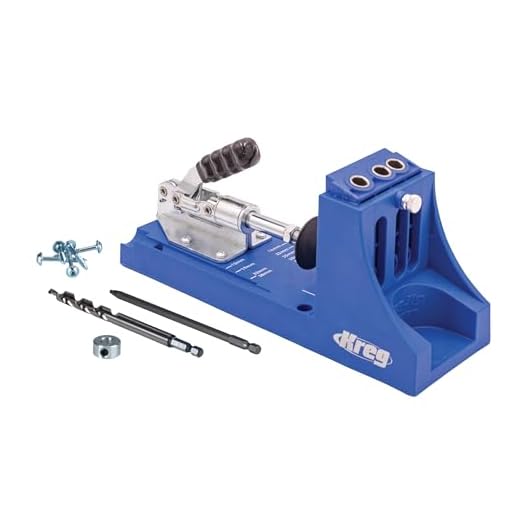
Kreg K4 Pocket Hole Jig – Adjustable, Versatile Jig for Strong Joints – Create Perfect, Rock-Solid Joints – Easily Adjustable Drill Guides – for Materials…
- Strong, Hidden Joints: Enables the creation of rock-solid pocket-hole joints that are strong and tightly fitted, suitable for a wide range of building projects.
- Adjustable for Various Materials: The drill guides are easily adjustable to accommodate material thicknesses ranging from 1/2-inch to 1-1/2-inches.
- Versatile 2-in-1 Design: Features a removable 3-hole Drill Guide that can be used with the benchtop base or detached for portable repairs.
- Secure Mounting: Designed with a large clamping recess to securely hold the jig in place on a workbench using standard clamps.
- Efficient Chip Removal: Includes wood-chip relief holes in the drill guide to keep the drill bit clear of debris for faster, cleaner drilling.
- The Philosophy: The Gateway Drug.
- The Logic: Woodworking purists sneer at pocket holes. Ignore them. Traditional joinery (mortise and tenon) takes years to master. Pocket screws take 10 minutes to learn. They are strong, hidden, and efficient.
- The ROI: This single jig allows you to build a table, a bench, or a cabinet carcass in a single afternoon. It removes the “intimidation barrier” of joinery.
- The Recommendation: The Kreg K4 . Don’t buy the mini; get the benchtop version.
4. The Impact Driver
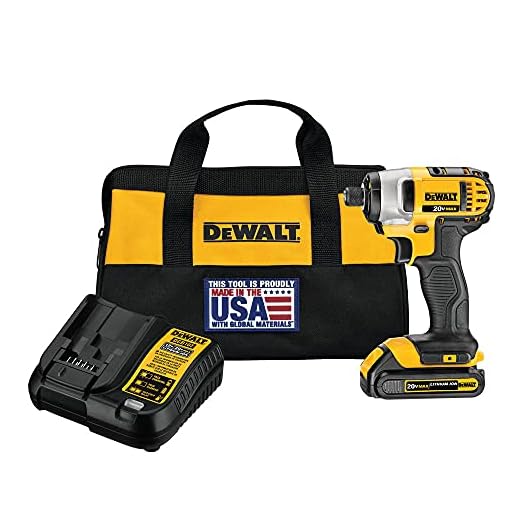
DEWALT 20V MAX Impact Driver Kit, 1/4-Inch, Battery and Charger Included (DCF885C1)
- Efficient Brushless Motor: Utilizes brushless technology for enhanced power, longer tool life, and extended runtime compared to traditional brushed motors.
- Variable Speed Control: A dial allows users to adjust speed between 7,000 and 11,000 OPM to suit different materials and desired finish qualities.
- Quick-Stop Electric Brake: Rapidly stops the sanding pad immediately upon trigger release, improving safety and efficiency between tasks.
- Superior Dust Management: Features excellent dust collection capabilities, including a dust bag and vacuum adapters to keep the work environment clean.
- Ergonomic and Lightweight: Designed with a soft grip and a lightweight body for comfortable one-handed operation.
- The Philosophy: Torque is leverage. Leverage is power.
- The Logic: A standard drill spins. An impact driver hammers while it spins. It drives 3-inch deck screws into solid knots without stripping the head or breaking your wrist. It turns a struggle into a squeeze of a trigger.
- The ROI: Time. What takes you 30 seconds of straining with a screwdriver takes 2 seconds with an impact driver.
- The “Buy It For Life” Pick: Milwaukee M18 Fuel or Makita LXT. These are the gold standards. Go to a job site; this is what the pros who feed their families use.
5. The Swanson Speed Square

Swanson SW1201K 7" & Big 12" Speed Square Layout Tool Kit Without Layout Bar,Blue
- Heavy-Duty Construction: Both squares are die-cast from a durable aluminum alloy to provide long-lasting accuracy and withstand job site abuse.
- Versatile Two-Pack Kit: Includes both the standard 7-inch Speed Square for quick tasks and the “Big 12” 12-inch square for handling larger layouts like stairs and rafters.
- Highly Visible Markings: Features easy-to-read gradations against a matte finish to prevent glare and ensure accurate readings in various lighting conditions.
- 5-in-1 Functionality: Each tool acts as a try square, miter square, saw guide, line scriber, and protractor, reducing the number of tools needed.
- Includes Swanson Blue Book: Comes with the legendary reference guide that teaches methods for roof construction and stairway layout.
- The Philosophy: Geometry never lies.
- The Logic: A thick chunk of aluminum that serves as a try square, miter square, saw guide, and line scriber. It has no batteries. It cannot break. If you drop it off a roof, it breaks the concrete, not the square.
- The ROI: Accuracy. If your cuts aren’t square, your furniture wobbles. If your furniture wobbles, it’s trash. This $12 tool ensures your $500 of wood doesn’t become scrap.
- The Recommendation: Swanson Tool Co. S0101 7-inch Speed Square. Accept no plastic imitations.
The Audit: Total Investment vs. One Trip to IKEA
You can acquire solid versions of all five of these tools for roughly $450 – $600.
That is the price of one particleboard dresser.
The dresser will be in a landfill in 5 years. These tools will build your house, your kids’ furniture, and your deck for the next 30 years.
Choose your assets.
The Final Word: Competence is Freedom
Ultimately, this isn’t just about saving money on end tables. It is about who owns your environment.
When you buy the particleboard, you are a passive consumer, dependent on a supply chain that hates you, buying a product designed to fail. You are renting your lifestyle from a corporation.
When you buy the wood and the tool, you become a producer. You decide the quality. You decide the dimensions. You decide the longevity.
There is a quiet, profound dignity in sitting at a table you built, eating dinner with your family, knowing that if a leg breaks, you don’t need to call customer service—you just need to walk to the garage.
That is what the Grounded Realist fights for. Not just a better home, but a stronger backbone. Stop buying their landfill. Start building your legacy.